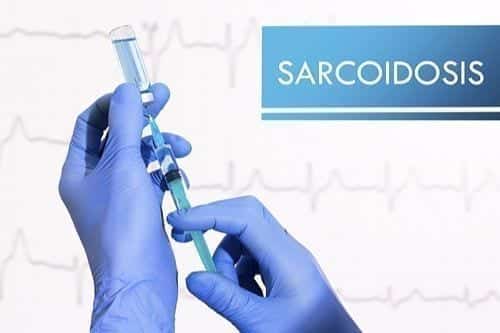
This post discusses Sarcoidosis and Social Security Disability benefits. If you have been diagnosed with Sarcoidosis, read on for how Social Security will evaluate your disability claim.
The Bishop Law Firm has represented disability clients since 2009; we do not get paid unless you win, and we also offer free case reviews.
You can call us at 919-615-3095 or start your free case review online now.

Social Security Disability Benefits
Social Security offers two main types of disability benefits: Social Security Disability Insurance (SSDI) and Supplemental Security Income (SSI).
SSDI benefits are based on the credits from the work (FICA taxes) you have done in your life, while SSI benefits are a need-based program.
If you are unable to work because of Sarcoidosis, the first (and most important) step is to apply for disability benefits online or by contacting your local Social Security office.
After applying, you must be found disabled under SSA's Five Step Sequential Evaluation before you are entitled to either benefit.
The Five-Step Sequential Evaluation
- Step 1 – Are You Working? The Social Security Administration defines work as “Substantial Gainful Activity” (SGA). SGA is roughly defined as work from earnings that average more than $1,620 per month (as of 2025). If you can perform substantial gainful activity, you generally will not qualify for disability benefits.
- Step 2 – Is Your Condition “Severe”? Severity is key when determining what qualifies as a disability. Severe is defined by the Social Security Administration as: your condition must interfere with basic work-related activities for your claim to be considered. Your medical records must show severity.
- Step 3 – Is Your Condition on the List of Disabling Conditions? The Listings are very hard to meet in most cases, and not always interpreted as a shared reading would suggest. If you meet a listing, you are gravely ill. The listings are found here.
- Step 4 – Can You Do the Work You Did Previously? The Social Security Administration will look at your work history and determine if it was sedentary, light, medium, or heavy. They will also evaluate the skill level: unskilled, semi-skilled, and skilled. For instance, an attorney would be sedentary skilled work. The Dictionary of Occupational Titles is here. SSA will also establish your residual functional capacity at this step.
- Step 5 – Can You Do Any Other Type of Work? If the Social Security Administration determines that you can no longer perform your previous duties, they then assess whether you can still perform other tasks. This is where the “grids” come into play. The grids are the Medical-Vocational Guidelines. The grids are only for exertional impairments. The grids do not consider non-exertional impairments. If you are found to be capable of any other work, you will be found not disabled. Read The Grids and Your Social Security Disability Case.

What is Sarcoidosis?
Sarcoidosis is a rare disease that affects more black people than white people and more women than men, according to The Cleveland Clinic.
The actual cause of Sarcoidosis is unknown, but it may be caused by the body’s immune system responding to a foreign substance in the body.
In people with a specific genetic makeup, exposure triggers the body to react and recruit inflammatory cells to the involved organs (via stopsarcoidosis.org).
Sarcoidosis is the growth of tiny collections of inflammatory cells in different parts of your body, according to The Mayo Clinic.
Granulomas from Inflammation
These inflammatory cells form lumps called granuloma(s). When an organ has many granulomas, it can affect its function.
The most common organ affected is the lungs (pulmonary sarcoidosis), but any body organ can be affected (e.g., skin, lymph nodes, heart, brain, liver, eyes, and nervous system) via NIH.
No Current Cure for Sarcoidosis
There is no cure for Sarcoidosis, and many people with the disease only have mild symptoms. But in some cases, Sarcoidosis can lead to organ damage.
Physical exam, lab tests, CT scans, MRIs, PET scans, x-rays, ABG testing, and pulmonary function tests, including spirometry testing and the DLCO test, usually diagnose Sarcoidosis.
Symptoms of Sarcoidosis
The symptoms vary depending on which organ(s) are affected. For respiratory disorders (lungs): shortness of breath, chest pain, and a dry cough are symptoms.
Pulmonary fibrosis can also result from an inflammatory disease.
For other parts of your body, possible symptoms include a scaly rash, red bumps on your legs, fever, sore eyes, hearing loss, joint pain, and swollen ankles.
In addition, fatigue, weakness, and weight loss may occur, according to the American Lung Association.
Methotrexate, Plaquenil, and Imuran are all medications used to treat Sarcoidosis sufferers.
Unfortunately, these medications can have their own side effects that can render one disabled.
Is Sarcoidosis a disability for SSA?
Yes, but as with every disability case in front of the Social Security Administration, the name of your illness is not as important as the severity of your symptoms.
If you have a Sarcoidosis diagnosis with mild symptoms that do not affect your ability to work, you will have a difficult time proving that you are disabled to Social Security.
In the alternative, if your Sarcoid has severely affected your ability to breathe or complete activities of daily living, you will have a better chance of winning your disability claim.
SSA requires medical evidence to establish the severity of your Sarcoidosis.
SSA can use "the listings", the "grids," or a combination of your impairments to find you disabled.
The Listings
The SSA maintains a "Listing of Impairments" called the "Blue Book," available here.
While there is no specific listing for Sarcoidosis in SSA's blue book, the Social Security Administration will evaluate your Sarcoidosis based on the affected organs.
Lung involvement would be evaluated by SSA under 3.00 Respiratory Adult (for a discussion of the pulmonary listings, see here).
Sarcoidosis is also mentioned in the explanation of the DLCO test in the respiratory listing.
SSA evaluates eye conditions under 2.00 Special Senses and Speech (for a discussion of the vision loss listings, see here).
Heart Issues (chronic heart failure) and Skin Disorders (skin lesions) are also potential listings that may apply to someone with Sarcoidosis.
SSA evaluates Kidney failure under Kidney Disease.
Unfortunately, multiple organs can be involved simultaneously.
Also read Social Security Disability Conditions.
The Grids
Even if you do not meet the listings mentioned above (most people do not), you still may be found disabled based on your Sarcoidosis if it causes functional limitations that prevent you from performing basic work activities.
These limitations can be used to find you disabled under SSA's Medical-Vocational Guidelines (The Grids) if you are 50 years of age or older (medical-vocational allowance).
The Combination of Your Impairments
Sarcoidosis may co-occur with other inflammatory diseases. The combination of your impairments may also prevent you from working.
SSA should evaluate the effect of all your symptoms from all your impairments and medication side effects when determining if you are disabled.
If you have been diagnosed with Sarcoidosis and are unable to work, file your claim for SSDI/SSI benefits as soon as possible.

Do you need a Social Security Disability Lawyer?
The Bishop Law Firm represents clients in North Carolina with Social Security Disability claims. Our owner, Kimberly Bishop, is a North Carolina Board Certified Social Security Disability Lawyer.
We offer free case reviews, and we do not get paid unless you win.
Call us today for a free case evaluation, (919) 615-3095, or start online now.