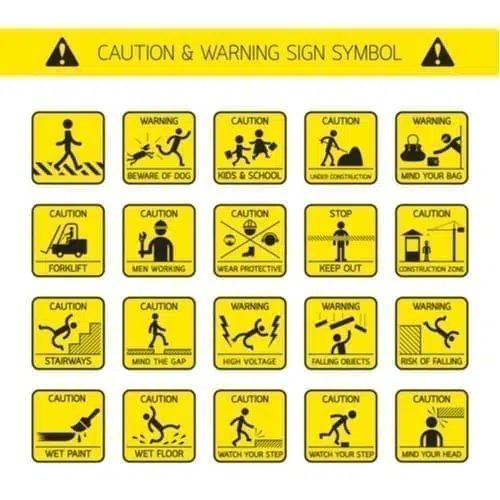
If you are injured in a premises liability accident, are you responsible for paying for your injuries, or is the landowner responsible?
Speaking with a North Carolina Premises Liability Lawyer can help you determine if you have an NC personal injury case.
The Bishop Law Firm does not get paid unless you win (on a contingency fee basis). We offer free phone case reviews at (919) 615-3095, or you can start online now.

North Carolina Premises Liability Law
Negligence of the property owner and injury to the victim are required under North Carolina Personal Injury Law.
Negligence
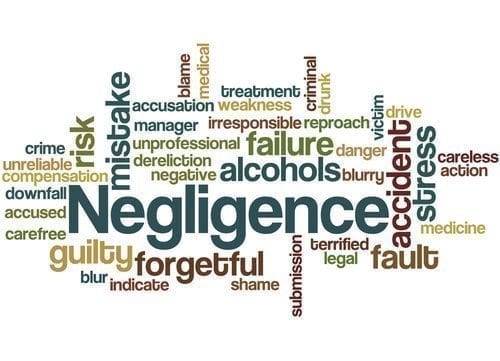
Simply put, the property owner must have failed in their duty to you, and that failure resulted in your injury.
For example, if property owners fail to repair broken stairs or warn visitors of the danger they pose, they have created a dangerous condition.
If a visitor is injured by the stairs that they could not have known were dangerous, negligence has occurred.
North Carolina is also a contributory negligence state, meaning that for an accident victim to recover, they must not be at fault for their injuries.
Contributory negligence can create unfair outcomes for victims, but unfortunately, it is the law in our state.
Statute of Limitations
As with other North Carolina personal injury claims, you have three years to file a claim for an injury you sustained on the property of another due to their negligence.
Types of damages available to victims
A victim with a premises liability claim can recover medical expenses, pain & suffering, and lost wages.
Punitive damages are rarely awarded.

Medical expenses and lost wages are economic damages, while pain & suffering and punitive damages are non-economic damages.
Medical expenses include bills for all (past, present, and future if warranted) treatment received due to your personal injury. This includes physical and mental health treatment.
An injured party should ensure they disclose their serious injuries to each physician who treats them.
Similarly, for claims for lost wages, victims should inform their employer of their absence and seek notes from their physicians documenting their inability to work due to the injury.
Pain & suffering is a non-economic damage because it has no exact dollar amount assigned to it; thus, insurance companies rarely want to pay it for liability cases.
Punitive damages are case-specific, require the property owner's negligence to be egregious, and are applicable in a premises liability lawsuit.
Read Pain & Suffering and Punitive Damages for more information.
Do you have a North Carolina Premise Liability Claim?
The answer to this question depends on who you are and where you are when the injury occurred:
Are you a lawful visitor or a trespasser?
For an injured person to recover, they must be a lawful visitor.
North Carolina landowners owe no duty to trespassers onto their property, but there are a few exceptions.
For example, swimming pools are considered attractive nuisances under NC law, which means children are likely to come onto your property and try to swim.
Because of this, if you own a swimming pool, you are required to keep a fence around it to protect people (even a trespasser) from drowning, even though it is on your private property.
At someone else’s North Carolina home
Suppose you are a lawful visitor on someone else’s property. In that case, the property owner owes you a duty of reasonable care not to unnecessarily expose you to hazardous conditions and to warn you of any hidden dangers.
Determining what reasonable care means, whether there has been unnecessary exposure to risk, and whether a landowner has breached this duty is often a matter for the jury to decide.
In terms of hidden dangers, for example, if there is a hole in the grass that is not readily apparent, a landowner must warn lawful visitors of the hole.
If there is an obvious hole, the landowner has no duty to warn the guest, because a reasonable person would have seen it. In failing to see the obvious hole, the victim was contributorily negligent.
Similarly, homeowners have a duty to keep their guests safe from unreasonable dangers.
If your friend’s dog attacks you, typically their homeowner’s or renter’s insurance will cover your injuries.
But, if you approach a dog in a fenced area that has a “beware of dog” sign and stick your hand in the fence and get a dog bite, you may be found contributorily negligent for your injury.
Read our post NC Dog Bite Personal Injury Lawyer for more information.
At a North Carolina Business
Businesses have a legal responsibility to keep their stores safe and to protect their customers from unsafe conditions.
For example, if water or a clear, slippery liquid is spilled on the floor at the grocery store, it can be difficult for a customer to see, and they could easily slip and fall without realizing it is there.
This is why places like grocery stores typically clean spills quickly and put up wet floor signs after mopping.
However, if there is a bright yellow wet floor sign, you see the employee mopping, and you still slip & fall, you cannot recover because a reasonable person would have seen and avoided the slippery floor.
You can also read NC Slip and Fall Cases.
At your rented residence
An apartment complex has a duty to provide adequate security measures to its tenants and maintain common areas.
If the apartment complex is aware of muggings and break-ins on their premises and does nothing to improve safety, they can be liable to someone who is a victim of crime on the apartment’s property.
In the alternative, if the apartment complex has increased security, added lighting, and a security fence, they are likely not held responsible for a victim’s injury by a third party.
In addition, inadequate maintenance by commercial property owners in common areas can result in preventable injuries to victims.
On public property
Depending on the specific facts and location of your injury, a state or governmental entity may be the property owner.
Sovereign and governmental immunity protects the government from lawsuits, unless the entity has explicitly waived that immunity.
Obtaining full and fair compensation can be difficult without the help of liability attorneys.
Premise Liability Lawyer, North Carolina

An NC Premises Liability Attorney can determine whether the landowner/business is responsible and if they have insurance coverage for your injuries.
A liability lawyer can help you gather evidence to demonstrate that the property owner knew or should have known about the hazard but did not exercise reasonable care in remedying the danger.
If you are injured on someone else’s property and are unsure whether you have a case, you can call The Bishop Law Firm at (919) 615-3095 for a free case review.
NC Premises Liability cases are very fact-specific in that you must be owed a duty, and there must be a breach of that duty which results in an injury to you that was not your fault.
Injured victims need help to recover compensation.
We represent injury victims in Raleigh , Durham , Rocky Mount , Wilson , Smithfield , Louisburg , Chapel Hill , Roanoke Rapids, Cary, Fayetteville, and beyond in North Carolina. Call us at (919) 615-3095 for a free case review.