This page explains the medical conditions that may qualify for Social Security Disability benefits and serves as a supporting resource for individuals considering representation by a North Carolina Social Security Disability attorney.
In our experience, the name of your ailment is frequently not as important as the severity of your symptoms for the purposes of attaining disability benefits.
The Bishop Law Firm has represented Social Security Disability clients before the Social Security Administration since 2009. We offer free case reviews and no fee unless you win.
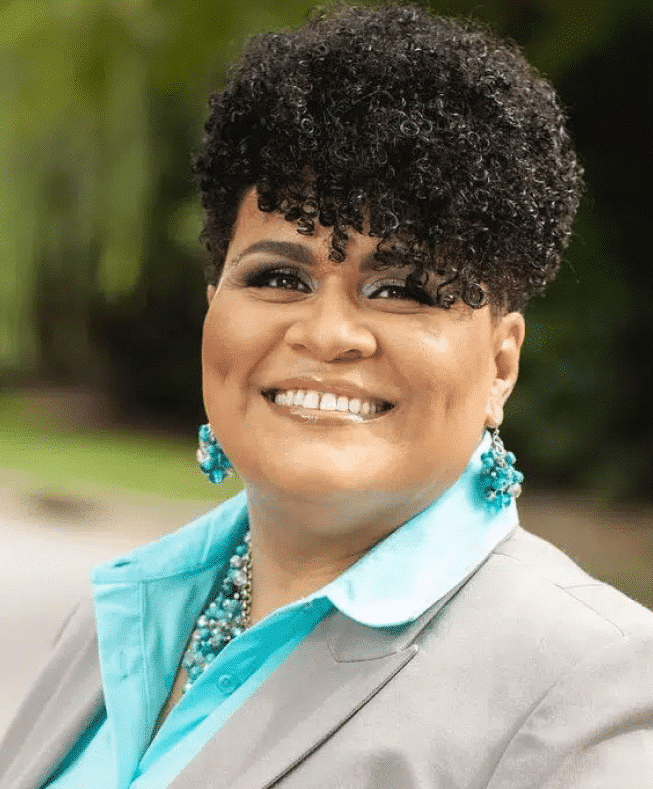
Our attorney, Kimberly Bishop, is a NC Board Certified Social Security Disability Law Specialist.
Also, Chasity Everett, EDPNA, has worked as a legal professional, helping Social Security Disability clients for 15 years, including the last 10 with Attorney Bishop.
Social Security Disability

Social Security Disability benefits are governed by federal law and administered by the Social Security Administration.
The medical conditions discussed below are evaluated under SSA disability rules based on medical evidence, work history, and functional limitations — not under personal injury or workers’ compensation laws.
A qualifying condition does not require proof that another person caused the condition.
After you apply for Social Security Disability or Supplemental Security Income, you may have to go through several levels to attain benefits (Initial, Reconsideration, Hearing, Appeals Council, and District Court).
At every level of the Disability Process, SSA uses the Five-Step Sequential Evaluation to determine if you are disabled.
- Step 1 – Are You Working? The Social Security Administration defines work as “Substantial Gainful Activity” (SGA). SGA is defined as work from earnings that averages more than $1,690.00 per month (2026). If you are making that amount, you generally will not qualify for disability.
- Step 2 – Is Your Condition “Severe”? Severity is key to determining whether a condition qualifies as a disability. Severe is defined by the Social Security Administration as: your condition must interfere with basic work-related activities for your claim to be considered.
- Step 3 – Is Your Condition on the List of Disabling Conditions? The Listings are tough to meet in most cases and not always interpreted as a shared reading would suggest. If you meet a listing, you are in grave condition. The listings are found here.
- Step 4 – Can You Do the Work You Did Previously? The Social Security Administration will look at your past work and determine if it was sedentary, light, medium, or heavy. They will also evaluate skill level as unskilled, semi-skilled, or skilled. For instance, an attorney's work would be considered sedentary skilled work. The Dictionary of Occupational Titles is found here.
- Step 5 – Can You Do Any Other Type of Work? If the Social Security Administration determines that you cannot do what you used to do, they then assess whether you can do anything else. This is where the “grids” come into play. The grids are the Medical-Vocational Guidelines. The grids are only for exertional impairments. Non-exertional impairments are not accounted for in the grids. If you are found to be capable of any other work, you will be found not disabled. Read The Grids and Your Social Security Disability Case.
As listed above, under the Five Step Sequential Evaluation, Social Security can use the Listing of Impairments (Listings at Step 3) or the Medical Vocational Guidelines (Grids at Step 5) to find you disabled. SSA also maintains the Compassionate Allowance List, which can be used alongside the Listings.
Simply because your impairment is/is not found in the Listings does not mean that you will/will not be found disabled. While increasing age helps significantly on the Grids, there is no guarantee of approval.
What makes someone eligible for Social Security disability?
To be eligible for Social Security Disability or Supplemental Security Income:
- You must make less than what SSA considers to be substantial gainful activity (SGA) (currently $1,690.00 (2026) a month gross) and
- Qualify for SSDI (from your work credits) or SSI (income/asset requirements) and
- Be found disabled by the Social Security Administration
Also watch: Who can apply for Social Security Disability?
When a Medical Condition Qualifies for Social Security Disability in North Carolina
If you believe your condition may qualify for benefits, having an experienced North Carolina Social Security Disability attorney review your medical records can make a critical difference.
Our firm helps clients establish the severity, functional limitations, and vocational impact at every stage of the SSDI process—from initial applications through appeals and hearings.
What conditions qualify as a disability for Social Security?
What qualifies as a disability for Social Security purposes varies by severity. Severity is key, not the name of your disease. While having an impairment on the Compassionate Allowance List can qualify you quickly, most people (fortunately) do not have impairments on that list.
I have had clients with asthma so severe that they could barely breathe with the help of 24-hour oxygen use. I have also had clients with cancer whose medical records described them as capable of running a marathon.
Over the years, we have written blog posts on various diseases and disability benefits. While we cannot guarantee how SSA will evaluate your case, these blogs feature some of the clients our firm has represented over the years.

Social Security Disability Conditions
Hereditary Hemorrhagic Telangiectasia
Mast Cell Activation Syndrome (MCAS)
Peripheral Arterial Disease (PAD)
Post Traumatic Stress Disorder (PTSD)
Obtaining Social Security Disability benefits can be challenging, and having an experienced legal team on your side can make a difference.
If you are unsure how the Social Security Administration will evaluate your condition, our Social Security Disability lawyer in North Carolina can explain your options and next steps.
The Bishop Law Firm represents Social Security Disability clients in Raleigh, Durham, Fayetteville, Cary, Rocky Mount, Wilson, Smithfield, Louisburg, Chapel Hill, Roanoke Rapids, and surrounding areas in North Carolina.